



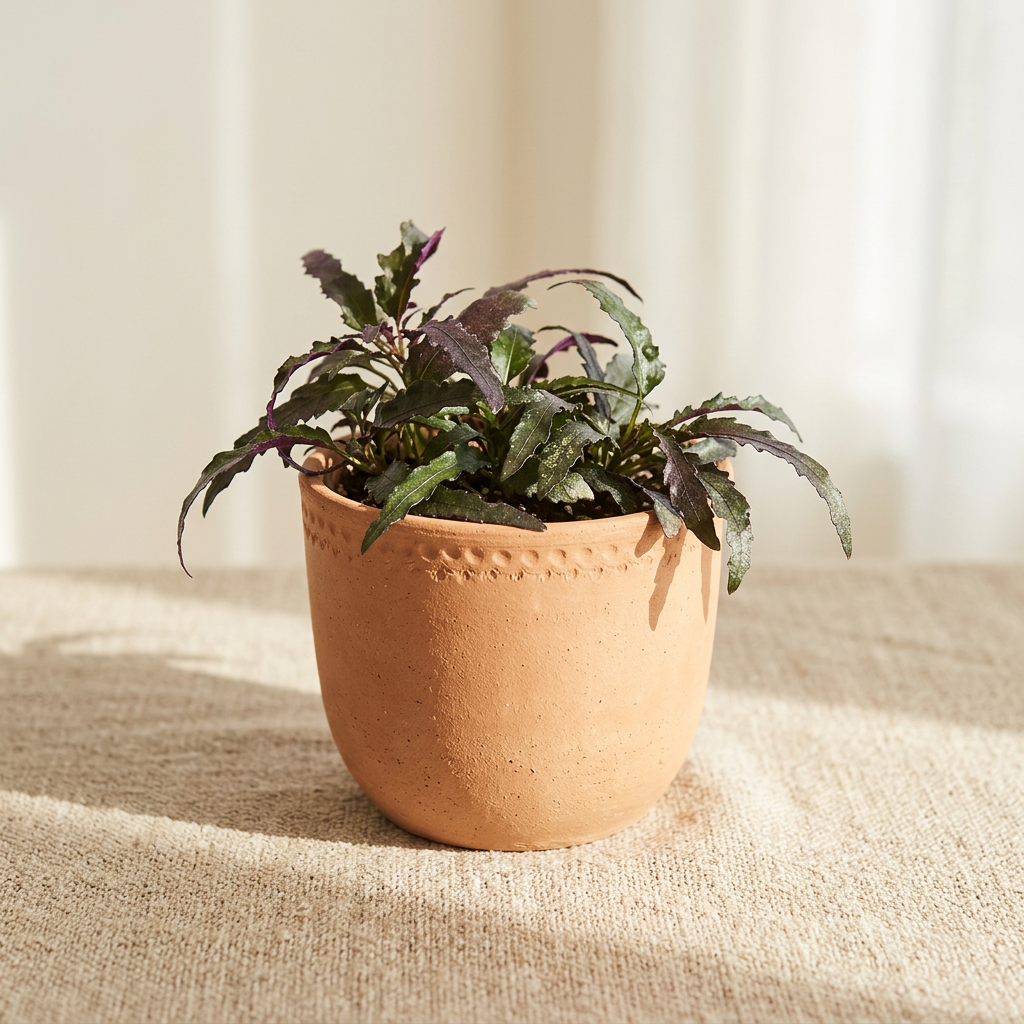
Dragon's Tongue 4" PLant (Hemigraphis repanda)
- Regular price
-
$12.00 - Regular price
-
- Sale price
-
$12.00
With its striking purple foliage, slender rippled leaves, and enchanting tropical appearance, the Dragon's Tongue (Hemigraphis repanda) is a captivating botanical beauty that brings a touch of mystery and magic to any plant collection. Its narrow, textured leaves showcase deep green to purple tones with rich violet undersides, creating a dramatic contrast that feels both wild and refined. As the plant grows, its dense, spreading foliage creates a lush carpet of color, making it a beautiful addition to terrariums, fairy gardens, and decorative planters.
Native to tropical Southeast Asia, this unusual member of the Acanthaceae family is prized for its distinctive foliage and love of warm, humid environments. Despite its exotic appearance, Dragon's Tongue is relatively easy to care for when provided with consistent moisture and humidity, making it a delightful choice for plant enthusiasts looking to add something a little extraordinary to their indoor jungle.
Why You'll Love It:
- Striking Purple Foliage: Slender leaves feature deep green and purple tones with vibrant violet undersides.
- Unique Texture: Narrow, rippled foliage creates a delicate yet dramatic botanical display.
- Terrarium Favorite: Thrives in warm, humid environments, making it perfect for enclosed tropical gardens.
- Compact & Spreading: Naturally low-growing with a lush, bushy habit that's ideal for smaller spaces.
- Whimsical Appeal: Its unusual shape and rich coloring bring a touch of fantasy-inspired charm to any plant collection.

Plant Care FAQs 🪴
- Plant Type: Chill
- Plant Vibe: Mystical Dragon
- Botanical Name: Hemigraphis repanda
- Family: Acanthaceae
- Light Requirements: Medium to bright indirect light; avoid harsh direct sunlight that can scorch delicate foliage.
- Watering: Keep soil consistently lightly moist. Water when the top ½–1" begins to dry, but avoid soggy conditions.
- Humidity: Thrives in high humidity (60–80% preferred).
- Soil: Rich, moisture-retentive but well-draining tropical potting mix.
- Fertilizer: Feed monthly during spring and summer with a diluted, balanced liquid fertilizer.
- Mature Size: Approximately 6–12 inches tall with a spreading growth habit.
- Growth Habit: Compact, bushy, and spreading.
- Toxicity: Not confirmed pet-safe. Keep away from cats, dogs, and other pets as a precaution
🏆 Pro Care Tip:
The secret to keeping your Dragon's Tongue vibrant and lush is maintaining consistent humidity and moisture. This tropical beauty loves humid environments and can develop crispy leaf edges when exposed to excessively dry air. For the healthiest growth, place it in a glass terrarium or near a humidifier where it can enjoy warm temperatures and bright, filtered light.
Regularly pinch back the growing tips to encourage a fuller, bushier appearance. Avoid allowing the soil to dry out completely, but ensure the roots are never sitting in standing water.
Bonus Tip: Dragon's Tongue may be sold as an aquarium plant, but it cannot survive permanently submerged underwater. Keep its roots in moist soil and its foliage above water for the best results.
✨ Styling Tip:
Create an enchanted miniature forest by pairing Dragon's Tongue with lush moss, delicate ferns, and small tropical plants inside a decorative glass terrarium. Its rich purple foliage contrasts beautifully with vibrant greenery, while vintage-inspired planters, natural stones, and dark ceramics enhance its mysterious, whimsical appearance.
For a dramatic botanical display, pair it with Purple Passion, Fittonia, or jewel-toned begonias to create a layered collection of colorful foliage.
🍵 Tea Pairing:
Sip on a fragrant hibiscus berry tea while admiring your Dragon's Tongue. The tea's rich ruby-purple hues beautifully complement the plant's dramatic foliage, creating a magical little moment of botanical relaxation.
⚠️ Please note: The plant you receive may not be the exact one pictured, but it will be of the same type and size. Each plant is unique! Expect natural variation in color, leaf shape, and size. Cosmetic blemishes are normal and do not impact plant health.
🚫 We do not accept returns or exchanges. Please review our shop policies before purchasing.
✅ Our Guarantee: We guarantee live arrival and pack every order with care. Reach out anytime with questions—we're happy to help!
Couldn't load pickup availability
-
Hurry, only 1 item left in stock!


Plant Care FAQs
7 Amazing Benefits of Houseplants
Boost Aesthetics:
Houseplants bring life and beauty to any space, softening harsh lines and adding natural elegance to your home or office. They even help screen views, fill empty spaces, and reduce noise, transforming your environment.
Purify the Air:
According to NASA, houseplants clean the air by removing toxins like carbon monoxide and formaldehyde, making your indoor spaces fresher and healthier. They also increase humidity, reducing dry skin and respiratory issues, especially during winter.
Enhance Mood & Productivity:
Plants aren't just beautiful—they make you feel good! Studies show that plants reduce stress, improve happiness, and boost concentration and memory by up to 20%. They’re also known to increase productivity and creativity in workspaces.
Therapeutic & Healing:
Caring for plants is therapeutic. Houseplants have been shown to reduce anxiety, depression, and even speed up recovery from illness or surgery, making them a great addition to your living space or even hospital rooms.
Increase Focus & Attention:
Live plants enhance focus and attention. Whether you're studying or working, having plants nearby helps you stay alert and concentrated, making them perfect companions for study areas and offices.
Job Satisfaction:
Adding plants to your office can lead to greater job satisfaction and a positive outlook. Research shows that employees working around greenery feel happier, more productive, and more connected to their workplace.
Improve Air Quality:
Plants are natural air purifiers, reducing harmful pollutants and refreshing the air. Species like spider plants, bamboo palms, and rubber trees help cleanse your indoor air, making your home healthier.
Watering
Houseplants have varying water needs depending on their growth and seasonal changes, so it's best to water as needed rather than on a schedule. Generally, water when the top 1/2 to 1 inch of soil is dry. Cacti need less water, while flowering plants may need more. Avoid overwatering, as it's a common cause of plant death. Water carefully to prevent leaf disease.
Fertilizing
Fertilizing houseplants depends on their growth rate, age, and season. Spring and summer are ideal for fertilizing as plants grow more, while little to no fertilizer is needed in fall and winter. Avoid overfertilizing, as it can burn roots. For flowering plants, use a balanced fertilizer and ensure it includes micronutrients to prevent deficiencies.
Plant General Care
Cleaning: Most houseplants benefit from regular cleaning to look their best. Dust tends to accumulate on leaves, so rinse them gently with room-temperature water. For plants with hairy leaves, use a soft brush to avoid trapping moisture. Smooth-leaved plants can be wiped with a soft cloth. This not only enhances their appearance but also helps them absorb more light.
Pruning: You can prune houseplants year-round, but fall is a great time to trim them after a summer of growth. Pruning helps improve their appearance and control size. Cutting back overgrown plants to 4-6 inches encourages rejuvenation, especially for trailing plants like Swedish ivy and pothos. Make cuts just above buds or side shoots to promote new growth, and remove any dead or diseased leaves to prevent spreading.
Pinching, which involves removing stem tips, encourages fuller, more compact growth. Simply pinch or cut the top leaves to stimulate side bud growth. Fast-growing plants benefit from regular pinching to maintain their shape.
Repotting: Check the roots—if they're circling the inside of the pot, it's likely time to repot. You can transplant into a slightly larger container or, if you prefer to keep the same pot, trim some of the roots and refresh the soil. Repotting is also a great time to divide plants with multiple stems to create new ones. Spring and summer are ideal for repotting.
Insects & Disease
Insects:
Several insects can attack houseplants, but insecticidal soap is an easy and effective treatment for most soft-bodied pests like aphids and spider mites. A strong spray of water can also help reduce their numbers. For insects with waxy coatings, such as scale and mealybugs, rubbing alcohol applied with a cotton ball works well.
Consistency is key—fast-reproducing pests like aphids and spider mites may need weekly treatments for about a month to fully eliminate them.
Fungus gnats, often mistaken for fruit flies, are common when plants are overwatered. Let the soil dry between waterings and remove any dead leaves from the soil surface. In severe cases, repotting the plant in fresh soil and a clean container may be necessary.
Plant Disease
To prevent the spread of plant diseases, promptly remove and destroy affected houseplants, leaves, or stems as soon as symptoms appear. Controlling insect populations can also help, as some diseases spread via pests. Common houseplant diseases and their treatments include:
- Powdery Mildew: Appears as powdery white spots on leaves.
- Fungal Leaf Spots: Yellow, brown, or black spots on leaves.
- Root Rot: Mushy, dark-colored roots, usually caused by overwatering.