



Sweetheart Vintage Silverware Bracelet | Salvaged Silver
- Regular price
-
$48.00 - Regular price
-
- Sale price
-
$48.00
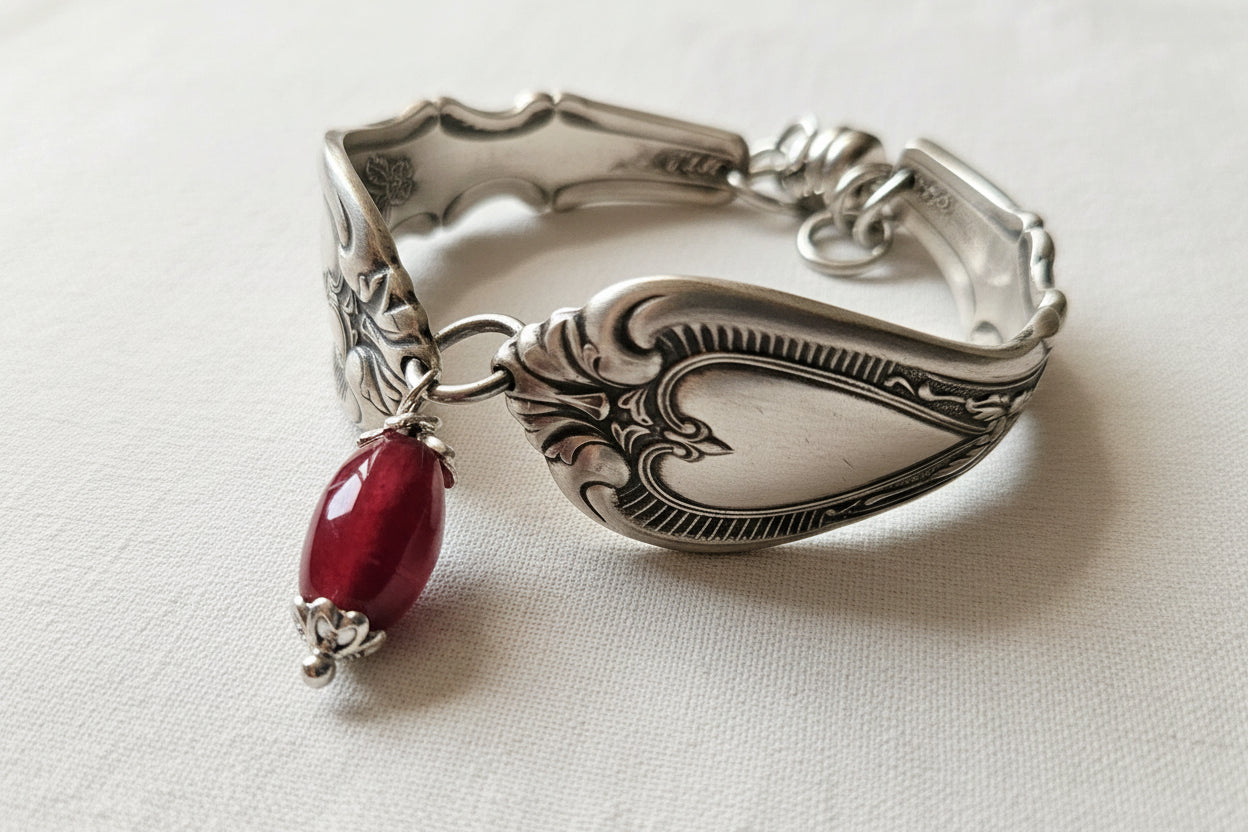
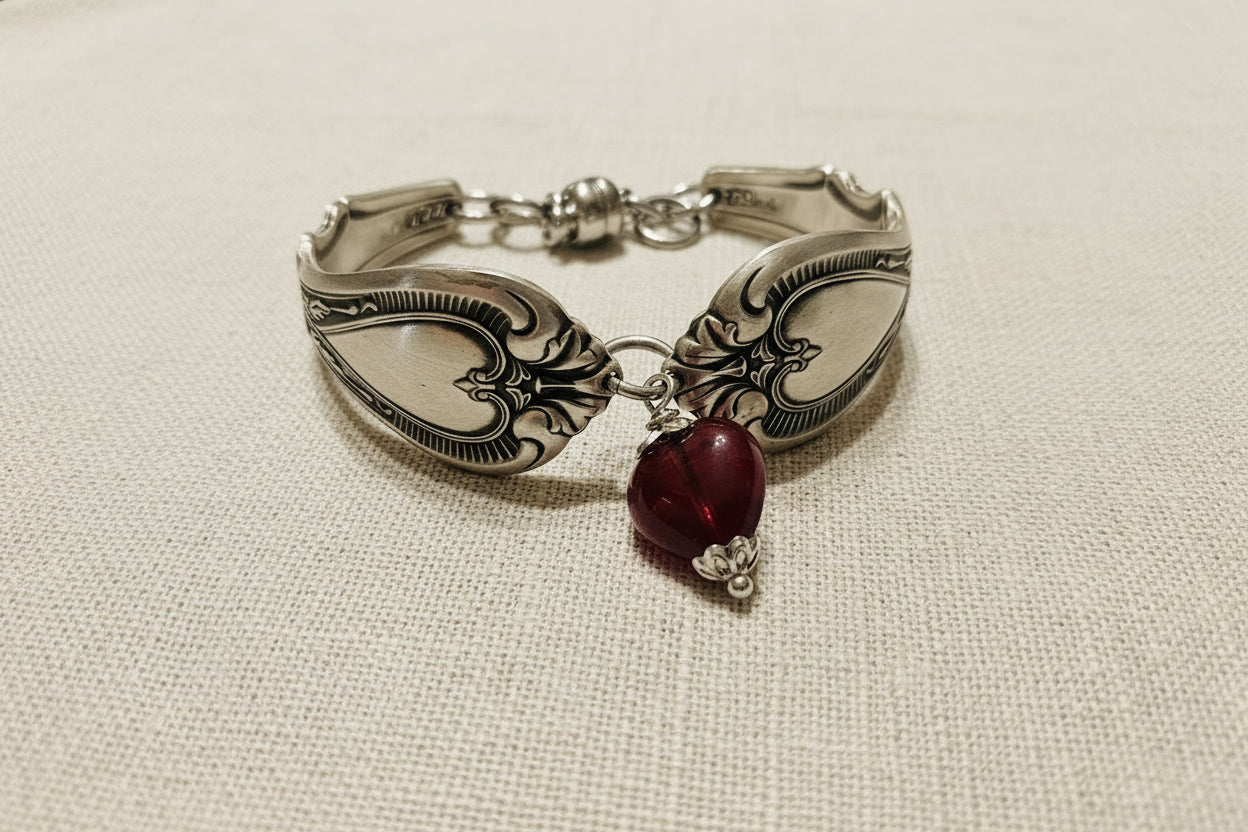
This Sweetheart Pattern Vintage Bracelet with Heart Accent is a romantic heirloom piece, handcrafted by jewelry artist KStonely in Eastern Washington. Made from authentic early-20th-century highly collectible Sweetheart pattern silverware by the Chase Silver Company, this silver-plated bracelet celebrates love, nostalgia, and timeless craftsmanship.
The Sweetheart pattern is treasured by collectors for its graceful curves, delicate scrollwork, and signature heart motifs—symbols of affection that have made it one of the most sought-after and collectible vintage silverware patterns of its era. A subtle heart accent adds an extra layer of meaning, making this bracelet as sentimental as it is wearable.
Each piece is individually hand-shaped, polished, and assembled, preserving the character and history of the original antique silverware while transforming it into a modern keepsake.
Details
- Size: 6.5–7.5 inches
- Pattern: Sweetheart (highly collectible), early 1900s
- Manufacturer: Chase Silver Company
- Accent: Heart detail
- Clasp: Lobster claw clasp
- Materials: Vintage silver-plated flatware, stainless steel connecting rings
Why You’ll Love It
- Highly Collectible Vintage: Crafted from one of the most beloved and collectible early-1900s silverware patterns
- Handcrafted & One-of-a-Kind: No two bracelets are ever exactly alike
- Lightweight & Comfortable: Designed for effortless, everyday wear
- Strong & Secure: Durable connecting rings and a reliable clasp
- Sustainably Repurposed: Antique silverware thoughtfully given new life
How to Style
- Everyday Romance: Pair with denim, linen, or soft knits for subtle vintage charm
- Bohemian Elegance: Complements florals, lace, and flowing silhouettes
- Statement Simplicity: Wear solo or stack with other vintage bracelets
Care Instructions
- Gently wipe with a soft polishing cloth
- Store in a cool, dry place to protect the patina
- Avoid prolonged exposure to moisture
A Piece of History, Reimagined
Produced by the Chase Silver Company in the early 1900s, the Sweetheart pattern is highly collectible for its romantic design, refined detailing, and enduring popularity among antique silver collectors. Its heart-forward motif has made it a favorite for generations.
Each bracelet retains subtle signs of age and wear, honoring its history while offering a new life as wearable art. More than jewelry, this piece is a timeless expression of love, craftsmanship, and sustainable artistry.
Artist Bio
KStonely (Kathy Epperley) is a visionary artist known for transforming vintage materials into meaningful, wearable art. From salvaged silverware jewelry to luminous suncatchers and imaginative ornamentation, her work blends nostalgia, nature, and storytelling—creating timeless treasures meant to be cherished for generations.
Couldn't load pickup availability
-
Hurry, only 1 item left in stock!


Plant Care FAQs
7 Amazing Benefits of Houseplants
Boost Aesthetics:
Houseplants bring life and beauty to any space, softening harsh lines and adding natural elegance to your home or office. They even help screen views, fill empty spaces, and reduce noise, transforming your environment.
Purify the Air:
According to NASA, houseplants clean the air by removing toxins like carbon monoxide and formaldehyde, making your indoor spaces fresher and healthier. They also increase humidity, reducing dry skin and respiratory issues, especially during winter.
Enhance Mood & Productivity:
Plants aren't just beautiful—they make you feel good! Studies show that plants reduce stress, improve happiness, and boost concentration and memory by up to 20%. They’re also known to increase productivity and creativity in workspaces.
Therapeutic & Healing:
Caring for plants is therapeutic. Houseplants have been shown to reduce anxiety, depression, and even speed up recovery from illness or surgery, making them a great addition to your living space or even hospital rooms.
Increase Focus & Attention:
Live plants enhance focus and attention. Whether you're studying or working, having plants nearby helps you stay alert and concentrated, making them perfect companions for study areas and offices.
Job Satisfaction:
Adding plants to your office can lead to greater job satisfaction and a positive outlook. Research shows that employees working around greenery feel happier, more productive, and more connected to their workplace.
Improve Air Quality:
Plants are natural air purifiers, reducing harmful pollutants and refreshing the air. Species like spider plants, bamboo palms, and rubber trees help cleanse your indoor air, making your home healthier.
Watering
Houseplants have varying water needs depending on their growth and seasonal changes, so it's best to water as needed rather than on a schedule. Generally, water when the top 1/2 to 1 inch of soil is dry. Cacti need less water, while flowering plants may need more. Avoid overwatering, as it's a common cause of plant death. Water carefully to prevent leaf disease.
Fertilizing
Fertilizing houseplants depends on their growth rate, age, and season. Spring and summer are ideal for fertilizing as plants grow more, while little to no fertilizer is needed in fall and winter. Avoid overfertilizing, as it can burn roots. For flowering plants, use a balanced fertilizer and ensure it includes micronutrients to prevent deficiencies.
Plant General Care
Cleaning: Most houseplants benefit from regular cleaning to look their best. Dust tends to accumulate on leaves, so rinse them gently with room-temperature water. For plants with hairy leaves, use a soft brush to avoid trapping moisture. Smooth-leaved plants can be wiped with a soft cloth. This not only enhances their appearance but also helps them absorb more light.
Pruning: You can prune houseplants year-round, but fall is a great time to trim them after a summer of growth. Pruning helps improve their appearance and control size. Cutting back overgrown plants to 4-6 inches encourages rejuvenation, especially for trailing plants like Swedish ivy and pothos. Make cuts just above buds or side shoots to promote new growth, and remove any dead or diseased leaves to prevent spreading.
Pinching, which involves removing stem tips, encourages fuller, more compact growth. Simply pinch or cut the top leaves to stimulate side bud growth. Fast-growing plants benefit from regular pinching to maintain their shape.
Repotting: Check the roots—if they're circling the inside of the pot, it's likely time to repot. You can transplant into a slightly larger container or, if you prefer to keep the same pot, trim some of the roots and refresh the soil. Repotting is also a great time to divide plants with multiple stems to create new ones. Spring and summer are ideal for repotting.
Insects & Disease
Insects:
Several insects can attack houseplants, but insecticidal soap is an easy and effective treatment for most soft-bodied pests like aphids and spider mites. A strong spray of water can also help reduce their numbers. For insects with waxy coatings, such as scale and mealybugs, rubbing alcohol applied with a cotton ball works well.
Consistency is key—fast-reproducing pests like aphids and spider mites may need weekly treatments for about a month to fully eliminate them.
Fungus gnats, often mistaken for fruit flies, are common when plants are overwatered. Let the soil dry between waterings and remove any dead leaves from the soil surface. In severe cases, repotting the plant in fresh soil and a clean container may be necessary.
Plant Disease
To prevent the spread of plant diseases, promptly remove and destroy affected houseplants, leaves, or stems as soon as symptoms appear. Controlling insect populations can also help, as some diseases spread via pests. Common houseplant diseases and their treatments include:
- Powdery Mildew: Appears as powdery white spots on leaves.
- Fungal Leaf Spots: Yellow, brown, or black spots on leaves.
- Root Rot: Mushy, dark-colored roots, usually caused by overwatering.